The Walk and Its Development
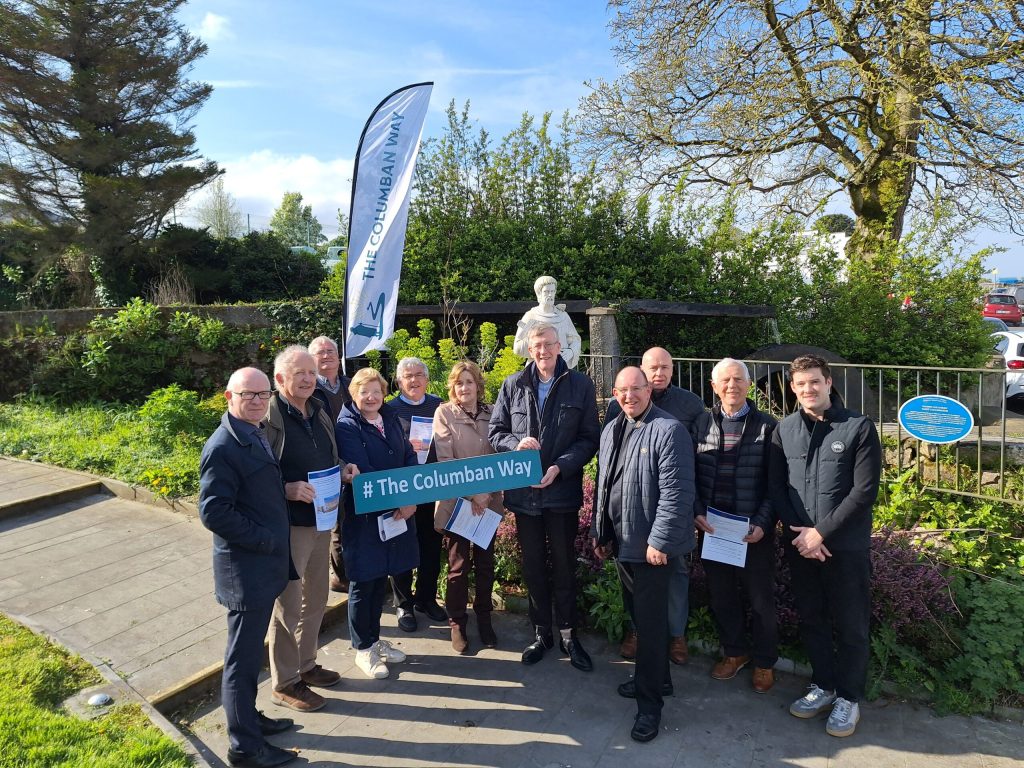
The Columban Way is a developing long-distance walking route designed to celebrate the life and legacy of Saint Columbanus. The project brings together communities, heritage organisations and tourism partners to create a cultural trail linking Columban sites across Ireland.
The development of the route aims to:
- Celebrate Ireland’s monastic heritage
- Promote sustainable walking tourism
- Connect communities through shared history
- Strengthen links between Ireland and Europe
By highlighting the story of Columbanus, the route helps tell a wider story about Ireland’s role in shaping European culture during the early medieval period.
As the project develops, new walking stages, heritage information and visitor experiences will continue to be added.
The Story of Saint Columbanus
His Journey and the Person
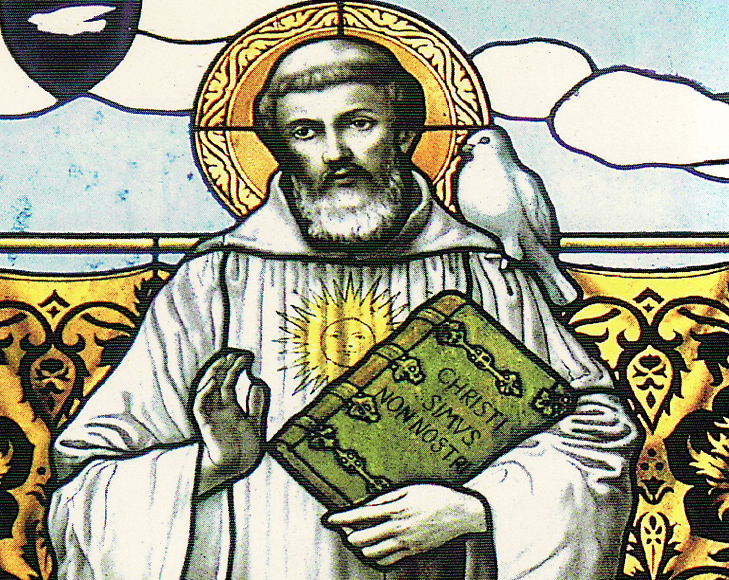
Saint Columbanus was born in Ireland around the year 543 during a period known as the Golden Age of Irish Monasticism.
For the modern Irish walker, the name Columban/Columbanus might conjure images of dusty schoolbooks or stained-glass windows. However, in the context of the 21st-century “slow travel” movement, Columbanus is emerging as the patron saint of the ultimate “European Road Trip”—one powered not by petrol, but by boots, grit and the discovery of new friends.
Ireland at this time was famous for its centres of learning, where monks studied theology, literature and philosophy. Columbanus was educated within this tradition and became known for his intelligence, leadership and strong spiritual discipline.
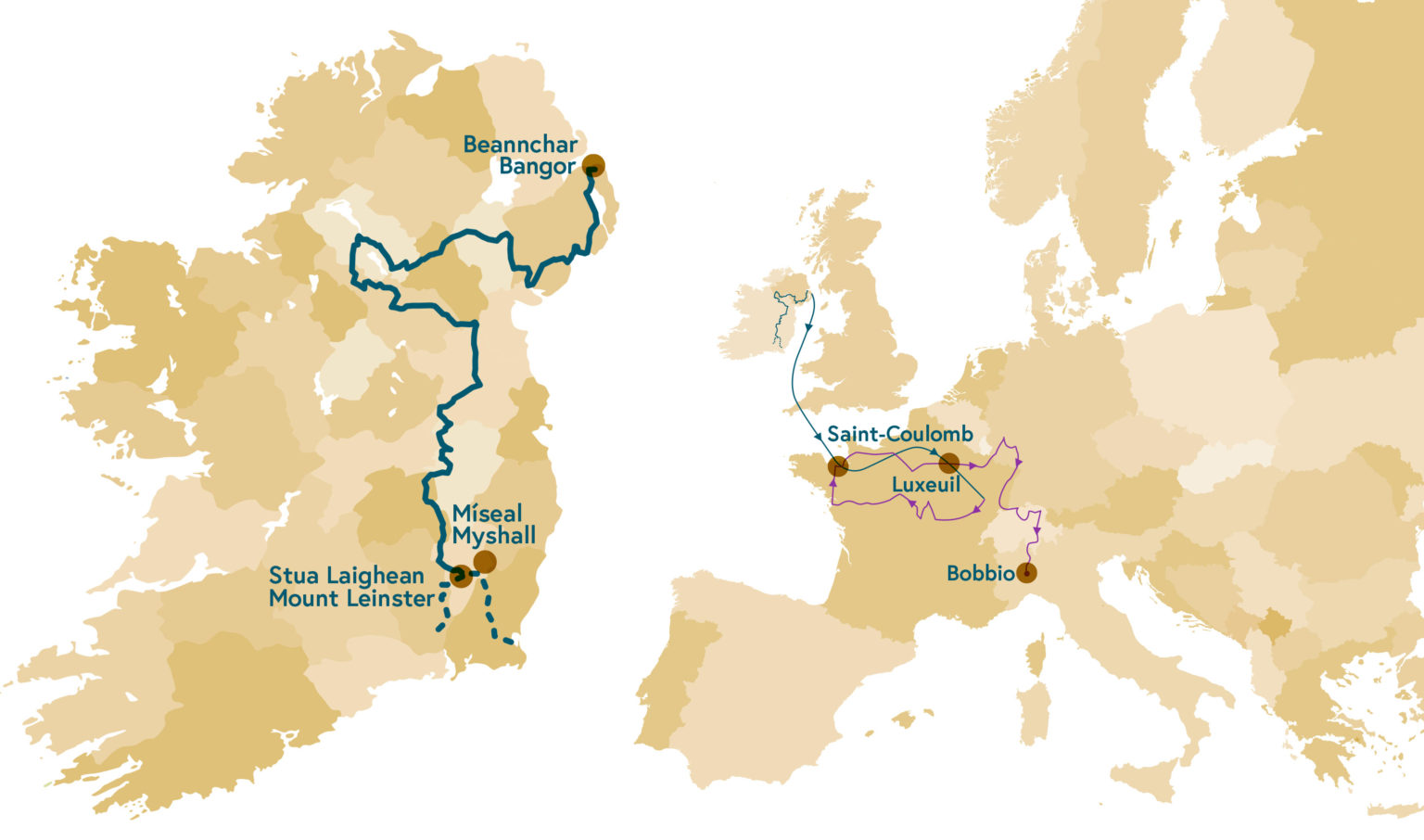
Born in Leinster around 543 AD, Columbanus became one of Ireland’s most influential early monks and missionaries. Raised near Myshall at the foothills of Mount Leinster in Co. Carlow, he later studied in Clonard, Co. Meath, and Cleenish in Fermanagh before spending more than twenty years at the renowned monastery of Bangor, Co. Down, under St Comgall.
A Journey Across Europe
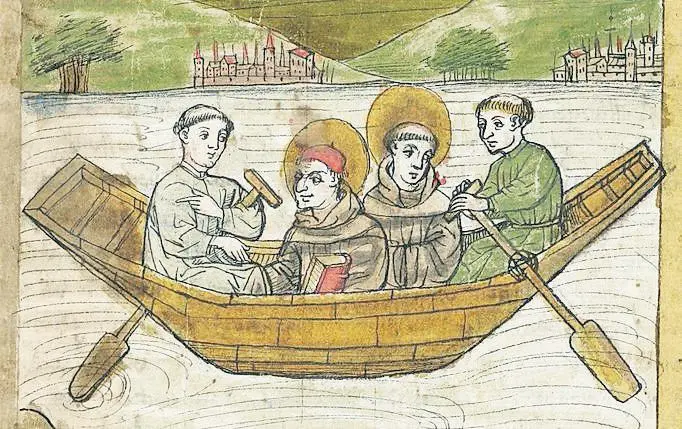
In mid-life, Columbanus felt called to leave Ireland and journey into Europe. Accompanied by twelve companions, he departed from Bangor on a Peregrinatio pro Christo — a spiritual “wandering for the love of Christ” — beginning an extraordinary journey that would leave a lasting impact across the continent.
Around the year 590 he left Ireland with twelve companions on a missionary journey across Europe. Being blown ashore near St Malo, Brittany, they eventually crisscrossed – on foot, horse and boat- what is now France (not once but twice ! ), Liechtenstein, Germany, Austria, Switzerland, and Italy. Their travels took them through several regions where Columbanus established monasteries that became influential centres of learning.
Important foundations associated with Columbanus include:
- Annegray in France
- Luxeuil in France
- Bobbio in Italy
These monasteries played a key role in preserving learning and culture during the early medieval period.
A Legacy That Crosses Borders and Centuries
Columbanus was also known for his writings and letters, which demonstrate his determination to maintain strong monastic discipline and spiritual commitment.
Today his legacy is recognised across Europe through many places associated with his life and work.
His legacy is also being revived through the Columban Way (Turas Columbanus), a pilgrim route that is similar to the Camino de Santiago but with a distinctly Irish soul. For a modern audience, the appeal lies in its radical “defiance” of borders.
From Carlow through the Hidden Heartlands to Ards and North Down, and across the Irish Sea to Europe, Columbanus offers a shared cultural bridge. His journey links the Mourne Mountains to the Alps and the rolling hills of Leinster to the Apennines in Italy.
THE NETWORK
Since Turas Columbanus is part of a Network that encompasses similar organisations both in Northern Ireland, and continental Europe, we automatically straddle and integrate the following two “borders”:
The North/South Connection
The European Link
The North/South Connection
The trail provides a unique “All-Island” tourism opportunity. By walking from the south to the north of Ireland, or vice versa, hikers experience the shared heritage of the island, transcending political boundaries through a shared love of the landscape and a common Britanno-Celtic heritage.
The European Link
This is not just an Irish story; it is a foundational European one. Columbanus famously told Pope Boniface IV : “We Irish… are disciples of St. Peter and St. Paul,” asserting an Irish identity on the grandest stage.
TOURISM AND THE GREAT OUTDOORS
For the hiking enthusiast, the Columban Way isn’t just about piety; it’s about varied terrain and authentic heritage. Unlike the highly commercialised sections of the French or Spanish Camino de Santiago, the European Columban Way offers a “frontier” feel.
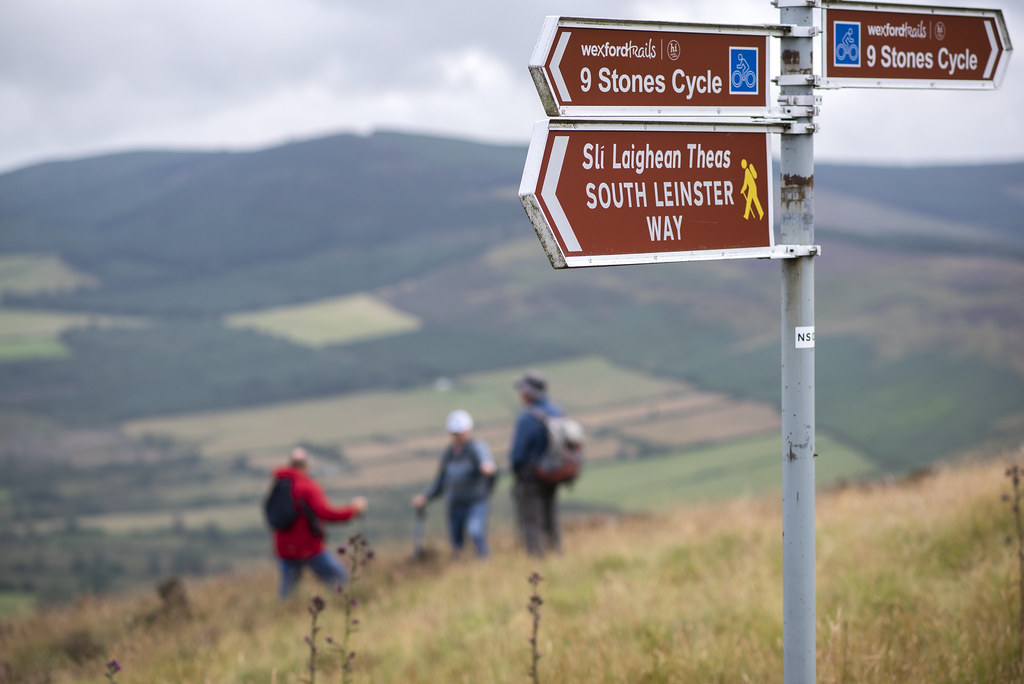
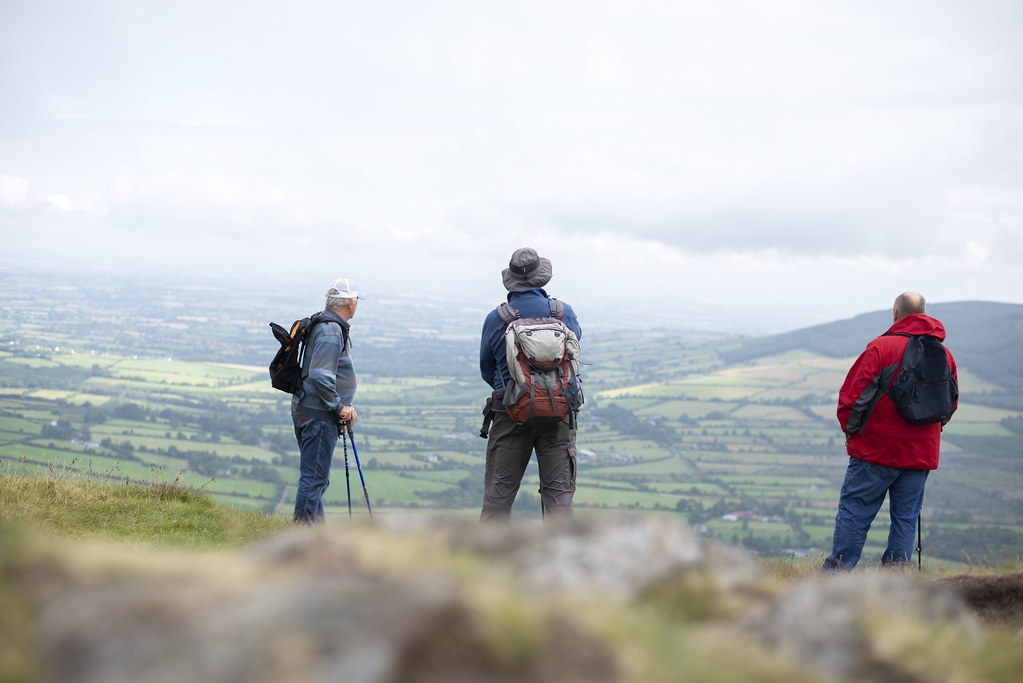
- Rugged, heather-clad slopes of The Blackstairs Mountains, where Columban’s journey began
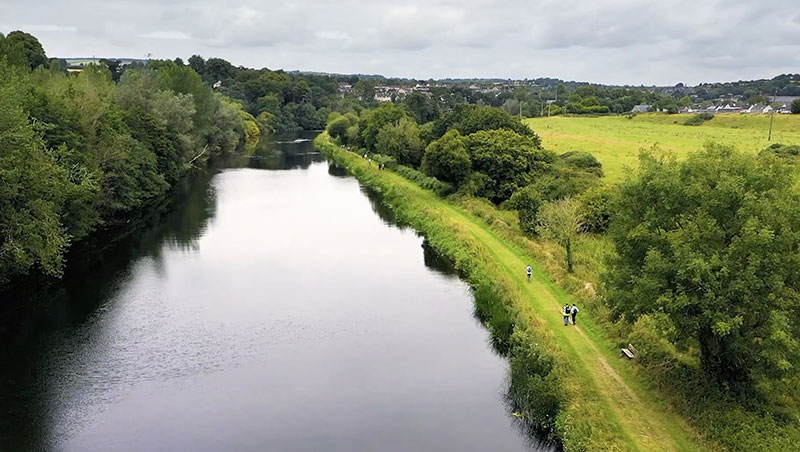
- Through the Lagan Valley’s green corridor toward the sea,
- The peaks of the Southern Vosges in France
- The Alps, Lake Constance and Appenines “of the Four Provinces” offer high-altitude challenges in the footsteps of these intrepid and faith-filled pioneers.
The tourism potential for local communities is immense.
Much like the Old Ghost Road in New Zealand or the West Highland Way in Scotland, a fully realized Columban Way creates a “green vein” of economic, cultural and spiritual activity. It invites walkers to stop in small villages, stay in local B&Bs, and enjoy a pint in a pub that might sit on the very site where a 6th-century monk once rested.
WHY IT MATTERS NOW
Columbanus was a man of immense character—stubborn, poetic, and fiercely independent. He represents a time when Ireland was the intellectual powerhouse of Europe. For the modern hiker, following his path is a way to reclaim that “Golden Age” heritage while reaping the mental health benefits of the trail.
As we look for sustainable ways to travel and deeper ways to connect with our neighbours, the cross-border trail of St. Columbanus stands as a 1,500-mile invitation to explore. It reminds us that while borders may exist on maps, the human spirit—and the paths we walk—have always aspired, and often accomplished, to reach across them to find the authentic “unity-in-diversity” we European and global citizens seek ever more intensely.